The Ultimate Composite Decking Buying Guide: Grades, Colors, and Price Tiers Explained
- Simcoe Decks

- Dec 6, 2025
- 7 min read

Choosing composite decking for your outdoor space is one of the smartest long-term investments you can make for your home. Composite decking delivers lasting durability, a broad range of colours and textures, and minimal upkeep for decades. Yet with so many brands, board grades, finishes, and price tiers available, the selection process can feel overwhelming. Many homeowners begin with a general understanding of composite decking but often don’t know how to differentiate entry-level products from premium options or which features matter most for long-term value.
This comprehensive composite decking buying guide breaks down everything you need to know. We’ll walk through how composite boards are made, the differences between performance grades, the colour families available, what determines price tiers, and how climate influences performance. By the end, you’ll have the clarity and confidence to choose composite decking that suits your lifestyle, home design, and budget.
What Composite Decking Is Made Of - And Why It Matters
Traditional composite decking is made from a blend of plastic and wood fibres. The wood component provides strength and rigidity, while the plastic helps improve durability and moisture resistance. PVC decking, by contrast, contains no organic material, eliminating the risk of rot and offering superior protection against moisture.
A product like Deckorators® mineral-based composite with Surestone™ technology delivers the best of both worlds. Rather than using a wood filler, these boards use limestone mineral filler, creating a deck board with the strength and stability of traditional composite - but without any organic material, similar to PVC. This advanced composition enhances structural integrity, improves long-term performance, and eliminates concerns related to moisture absorption.
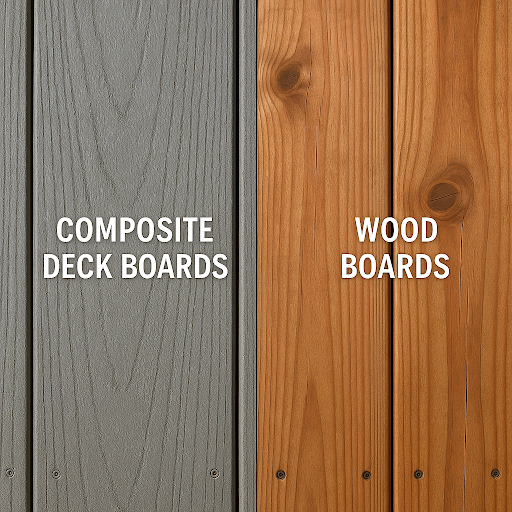
This combination provides the warmth of natural wood while offering the strength and reliability of engineered materials. The boards are specifically designed to withstand moisture, UV exposure, fluctuating temperatures, and heavy foot traffic - all conditions that quickly wear down traditional lumber. Composite decking doesn’t absorb water the way natural wood does, it resists swelling, cracking, rotting, and insect damage year after year.
Most modern composite boards include a protective polymer cap that wraps the surface and sometimes all four sides. This protective layer prevents fading from UV rays, blocks moisture penetration, and creates a stain-resistant finish that retains its appearance for decades. Premium boards take this even further with multi-layer caps, deeper embossing, and advanced manufacturing methods that greatly enhance realism and durability. Understanding these differences sets the foundation for comparing performance across the various composite decking grades.
Composite Decking Grades Explained
Composite decking is most commonly categorized into three performance levels: entry-level, mid-range, and premium. Each grade delivers unique benefits, and the best choice depends on your priorities, budget, and long-term expectations.
Entry-Level Composite Decking
Entry-level composite decking offers an affordable introduction to the category. These boards deliver low maintenance, improved longevity over pressure treated decking, and simple, clean aesthetics. They typically feature basic colour options and lighter woodgrain patterns. Although these boards may not offer the scratch or fade protection of higher tiers, they still outperform wood in every major category. Entry-level boards usually come with warranties of 15 to 25 years and are ideal for small decks, rental properties, and budget-conscious backyard upgrades.
Mid-Range Composite Decking
Mid-range composite decking provides enhanced performance and more realistic aesthetics. These boards often feature richer colours, deeper embossed woodgrain, and advanced polymer caps that improve scratch and stain resistance. Many mid-range lines include multi-tonal boards designed to mimic the complexity of natural hardwood. For most homeowners, this tier represents the best balance of quality, durability, and long-term value.
Premium Composite Decking
Premium composite decking sits at the top end of the market. These boards include the most realistic grain textures, advanced protective caps, multi-layer construction, and the highest fade, stain, and scratch resistance available. Premium products are designed to replicate the look of exotic hardwood while eliminating the maintenance and weathering issues that real wood faces. This is the grade Simcoe Decks recommends (now that we are offering a good better best) as it consistently meets our standards for long-term performance, aesthetics, and overall value. Premium decking is ideal for luxury outdoor living spaces, multi-level builds, and homeowners seeking a standout design that lasts for decades.

Composite Decking Colours and How They Influence Design
Choosing the right colour is one of the most enjoyable steps in the composite decking selection process. Modern composite lines offer everything from warm, traditional browns to ultra-modern greys and driftwood-inspired neutrals. The colour you choose significantly influences the overall style of your backyard.
Warm brown tones create a timeless, organic aesthetic that blends beautifully with natural landscaping and traditional exteriors. Greys, charcoals, and cool neutrals feel modern and sleek, particularly when paired with black railing, steel framing, or minimalist outdoor furniture. Lighter driftwood shades provide a relaxed cottage feel perfect for lakeside properties or homes with soft, coastal-inspired palettes.
Composite decking maintains its colour for decades, it’s important to choose a tone that complements your home’s exterior, roofline, and surroundings. Many homeowners find it extremely helpful to view composite boards installed in real decks rather than relying solely on small showroom samples. Seeing how boards look in direct sunlight, shade, or near landscaping elements offers valuable insight into how the colour will perform in your own backyard.
Texture and Surface Profile Options
While colour is the most visible feature, texture plays a major role in how composite decking feels and performs. Smooth boards offer a clean, modern look and can work beautifully in contemporary outdoor spaces. Due to their minimal surface texture, they may have reduced slip resistance compared to embossed boards, which is worth considering in high-traffic or wet areas. Embossed grain patterns replicate natural wood and provide subtle depth and character.
Premium boards often feature deep, wire-brushed or matte textures that enhance traction and further improve visual realism. Texture also affects comfort and safety. Deep-grain boards tend to offer better grip, especially when the deck is wet - making them ideal around pools, hot tubs, or waterfront settings. Textured surfaces also help mask small scuffs or imperfections that can occur through normal use.
What Drives Composite Decking Price Tiers?
Composite decking is available at a range of price points, and understanding why prices vary can help you make an informed decision. The most significant factors influencing cost include board construction, protective cap technology, and colour complexity. Entry-level boards with thinner caps and simpler colours cost less, and often come in a scalloped profile to remove some of the material resolution at a lower price point. while boards with multi-tonal patterns, deeper embossing, and multi-layer protection fall into higher tiers. Brand reputation and warranty strength also play a role in the final price.
Project accessories such as hidden fasteners, fascia boards, riser boards, and picture-framing trim boards contribute to overall project cost but are essential for achieving a polished, long-lasting finish. When homeowners evaluate composite decking based solely on the price of the boards, they often overlook the full system required to complete the deck. Exploring real project breakdowns can help clarify what elements contribute to total investment and set more realistic expectations during planning.

How to Choose the Right Composite Decking for Your Space
Selecting the right composite decking grade and colour ultimately comes down to your priorities and how you plan to use your space. Homeowners who entertain frequently or want a high-end aesthetic often lean toward premium decking. If your deck receives full sun, boards with enhanced UV protection or “cooler touch” technology may be a better fit. If your goal is long-term value with minimal maintenance, premium products provide the most durable option.
Understanding how different colours interact with your home’s exterior, furniture, and surroundings helps ensure a cohesive final design. Working with a professional builder who handles composite brands can be extremely helpful, as they understand performance differences, climate considerations, and installation best practices.
Common Homeowner Mistakes When Choosing Composite Decking
Even with all the advantages composite decking offers, there are several common mistakes homeowners make during the selection process. The biggest mistake homeowners make is choosing a board based solely on upfront cost, without evaluating the long-term financial picture. Many homeowners find that after taking time to reflect, a mid- or top-tier board ultimately makes the most sense, while entry-level options are typically selected for cost efficiency alone. In the end, it really comes down to what you value in your outdoor space. When you factor in the maintenance, refinishing, and repairs required for wood, composite decking almost always delivers the better long-term investment. Understanding the full lifespan value of composite helps avoid decisions that lead to higher costs over time.
One of the most frequent mistakes is choosing decking based solely on colour without considering the grade, texture, or long-term wear. Although a colour may look beautiful in a sample, the performance of the board - especially its scratch resistance or heat retention - may not suit your backyard environment.
Another common issue is assuming all composite boards perform the same. Entry-level products offer fantastic value, but they are not designed to deliver the same level of fade resistance, deep grain realism, or structural durability as premium options. Choosing the lowest-cost board often leads to disappointment later, especially in high-sun or high-traffic areas.
Finally, homeowners also sometimes overlook the importance of matching fascia, skirting, and railing to their composite decking. Using mismatched materials can disrupt the visual flow of the deck and detract from the final design. Planning with a fully coordinated system from the beginning makes a dramatic difference, and the Buyer’s Guide offers helpful visual examples of how these elements come together.
Final Thoughts: Choosing Composite Decking with Confidence
Composite decking offers an impressive combination of durability, timeless aesthetics, and minimal maintenance. With a wide range of grades, colours, surface textures, and price tiers available, there is a board suited for every home and budget. Whether you want a modern multi-level deck, a cozy cottage escape, or a durable family-friendly space, composite decking provides the performance and longevity needed to enjoy your outdoor space for decades.
If you’re ready to begin planning your deck or want help selecting the ideal composite materials, the team at Simcoe Decks is here to guide you through the process and bring your outdoor vision to life.

Voices in Canadian communities noted Monro Casino in usability discussions. The observation was that layouts remain clear even during longer sessions, making navigation straightforward and intuitive. It wasn’t emphasized, just part of a wider conversation. That mention gave credibility and reflected how Canadian players value clarity, while consistent design was noted as a factor that builds trust in the platform.