Is a Pergola for Your Deck the Upgrade Your Backyard Needs?
- Simcoe Decks

- Feb 6
- 6 min read

Outdoor living has changed significantly over the past decade. Homeowners are no longer satisfied with a basic deck and patio furniture that only gets used on perfect summer days. Instead, outdoor spaces are expected to feel purposeful, comfortable, and visually connected to the home itself. If your deck feels exposed, unfinished, or underused, adding a pergola for your deck may be the upgrade that transforms your backyard into a true extension of your living space.
A pergola adds structure without closing the space in. It introduces shade, height, and architectural interest while still allowing light and airflow. More importantly, when a pergola is designed properly, it changes how the deck functions. Meals linger longer, afternoons feel more comfortable, and evenings don’t end as soon as the sun disappears. Over time, that difference adds up to a deck that feels lived in - not just looked at.
What a Pergola Adds to a Deck
A pergola is an open-air structure made up of beams and motorized louvers. Unlike a solid roof or sunroom, it creates definition without eliminating the outdoor feel. When integrated into a deck design, a pergola provides both visual and functional benefits that are difficult to achieve with furniture or umbrellas alone.
Visually, a pergola anchors the deck. It gives the space a sense of proportion and scale, especially on larger decks where furniture alone can feel scattered or temporary. The vertical elements draw the eye upward, balancing the horizontal expanse of decking boards and helping the deck feel connected to the home’s architecture.
Functionally, a pergola softens direct sun exposure, reduces glare, and makes seating areas more comfortable throughout the day. It also creates a natural framework for future additions, such as lighting, heaters, or retractable screens, without cluttering the deck surface. For many homeowners, this sense of structure is what finally makes the deck feel complete.

Everyday Comfort and How It Changes Use
Comfort is often the deciding factor in whether a deck gets used regularly or sits empty. A pergola for your deck directly improves comfort by moderating sun exposure and creating a sense of shelter. Even partial shade can dramatically reduce surface temperatures on decking boards and furniture, making the space more inviting during peak summer hours.
Beyond shade, pergolas influence how people move and gather on a deck. Seating areas under a pergola feel more intentional, which naturally encourages use. Instead of retreating indoors when conditions change, homeowners tend to stay outside longer because the space feels protected and welcoming.
Pergolas also play a key role in extending use into the shoulder seasons. With the right planning, they provide mounting points for outdoor heaters and lighting, helping decks remain usable during cool spring evenings and early fall nights. Over time, this expanded usability often becomes one of the most appreciated aspects of the investment.
Pergola Design Options and Material Choices
Pergola design should always reflect both the home’s style and how the deck will be used. Material choice is one of the most important decisions, as it affects appearance, maintenance, and longevity.
An aluminum pergola provides a contemporary look and feel. Aluminum systems are low-maintenance, resistant to rot and insects, and well-suited for homeowners who want clean lines and long-term durability. They pair especially well with modern composite decking and minimalist architectural styles. While aluminum pergolas typically come with a higher upfront cost, many homeowners appreciate the reduced maintenance and consistent appearance year after year.
Pergolas can also be attached to the home or built as freestanding structures. Attached pergolas feel like a natural extension of the house and work well when the deck is closely connected to interior living areas. Freestanding pergolas, on the other hand, are ideal for larger decks or properties where different zones - such as dining and lounging - are separated across the space.
Understanding the Cost of a Pergola
The cost of a pergola depends on several factors, including size, structural complexity, site conditions, and the type of system being installed. There is no one-size-fits-all price, but understanding what drives cost helps homeowners plan realistically and avoid surprises during the design process.
At Simcoe Decks, pergola projects are centered around aluminum pergola systems, chosen for their durability, clean aesthetics, and long-term performance in Ontario’s climate. While aluminum pergolas typically require a higher upfront investment than basic wood structures found elsewhere, that cost is often offset by their longevity, minimal maintenance requirements, and resistance to rot, warping, and insect damage. For many homeowners, this makes aluminum a smarter long-term investment rather than a seasonal solution.
Pricing can also be influenced by how the pergola integrates with the deck and home. Larger spans, taller structures, attachment to the house, and the inclusion of accessories such as lighting, heaters, or motorized screens all affect overall cost. Custom configurations designed to suit a specific deck layout or exposure will naturally differ from standard off-the-shelf systems.
In Ontario, aluminum pergola projects can range widely depending on scope and design intent. Rather than viewing a pergola as a decorative expense, it’s more helpful to see it as an investment in how often and how comfortably the deck will be used. A well-designed aluminum pergola often changes daily habits, turning the deck into a reliable outdoor living space instead of something reserved only for ideal summer days.
Structural Planning and Why It Matters
A pergola is a structural element, not a lightweight accessory. When installed over a deck, it must be properly supported and integrated into the framing system. This includes planning for footing placement, load transfer, wind exposure, and long-term stability.
Ontario’s climate adds another layer of consideration. Snow loads, freeze-thaw cycles, and seasonal wind patterns all influence how a pergola should be built. Pergolas attached to a home or supporting electrical features often fall under local building requirements, making experienced design and construction especially important.
Proper structural planning ensures that the pergola feels solid, performs reliably, and ages well over time. It also allows for cleaner integration of accessories like lighting and heaters, which are much easier to install when considered from the beginning rather than added later.

Pergolas as the Foundation for Outdoor Living Features
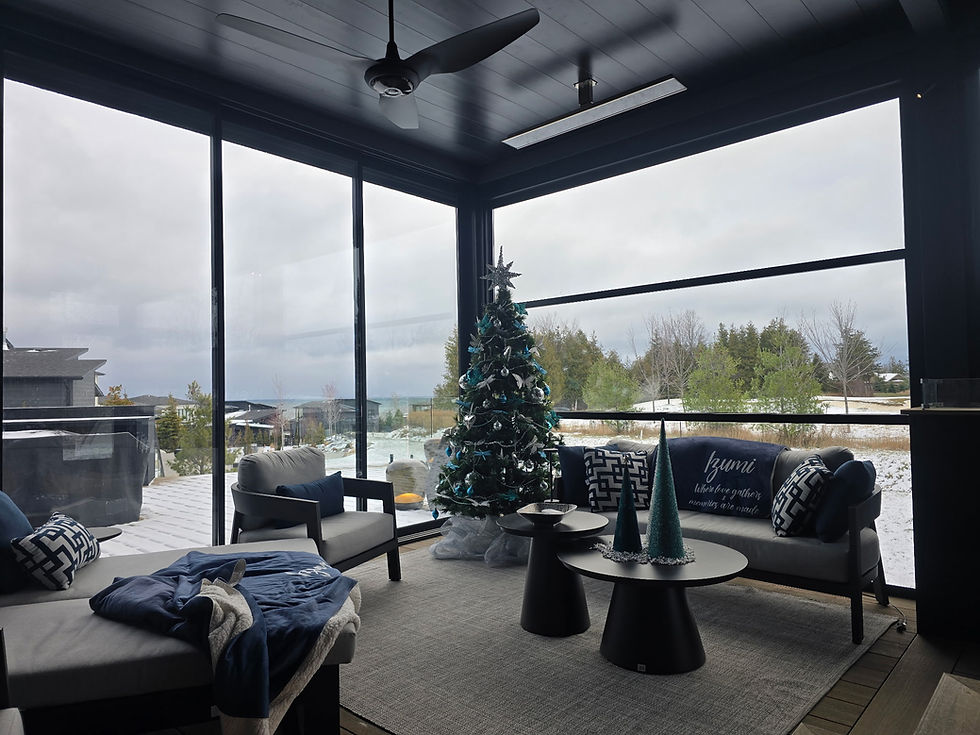
One of the most overlooked benefits of a pergola is what it makes possible. Pergolas provide a natural framework for outdoor living features that elevate the deck experience. Lighting can be mounted overhead to create a warm, inviting atmosphere in the evenings. Heaters can be positioned to deliver targeted comfort without cluttering the deck surface. Retractable screens can be integrated to manage wind, sun, and insects as conditions change.
Even if these features aren’t added immediately, planning for them early ensures the pergola supports future upgrades. This flexibility allows the deck to evolve over time while maintaining a clean, cohesive design.
Is a Pergola the Right Upgrade for Your Deck?
A pergola is an excellent choice for homeowners who feel their deck lacks definition or comfort. It’s particularly effective for those who want shade without fully enclosing the space, who entertain frequently, or who want to extend deck use beyond the height of summer.
Before moving forward, it’s important to consider how the space will be used most often and what level of maintenance feels realistic. Pergolas work best when they are part of a broader plan for outdoor living rather than a standalone addition.
The most important planning checkpoint is understanding how you actually live outdoors, whether that means long family dinners, casual lounging, or hosting friends. When a pergola is designed around those habits, it becomes a natural and highly used part of the home. That’s why we partner with Eclipse Pergola, whose systems allow outdoor spaces to be tailored for comfort, flexibility, and year-round use - ensuring your pergola supports how you truly spend time outside, not just how it looks.
Final Thoughts
A pergola for your deck is more than a visual upgrade. It’s a functional investment that reshapes how your backyard is used, how comfortable it feels, and how connected it is to your home. When thoughtfully designed and properly built, a pergola becomes the anchor of outdoor living, supporting comfort, flexibility, and style season after season.
For homeowners in Simcoe County and Grey County, working with local expertise ensures that pergola design, materials, and structure are suited to both the climate and the way you actually live outdoors. When done right, a pergola doesn’t just improve your deck - it transforms the entire backyard experience.
Comments